
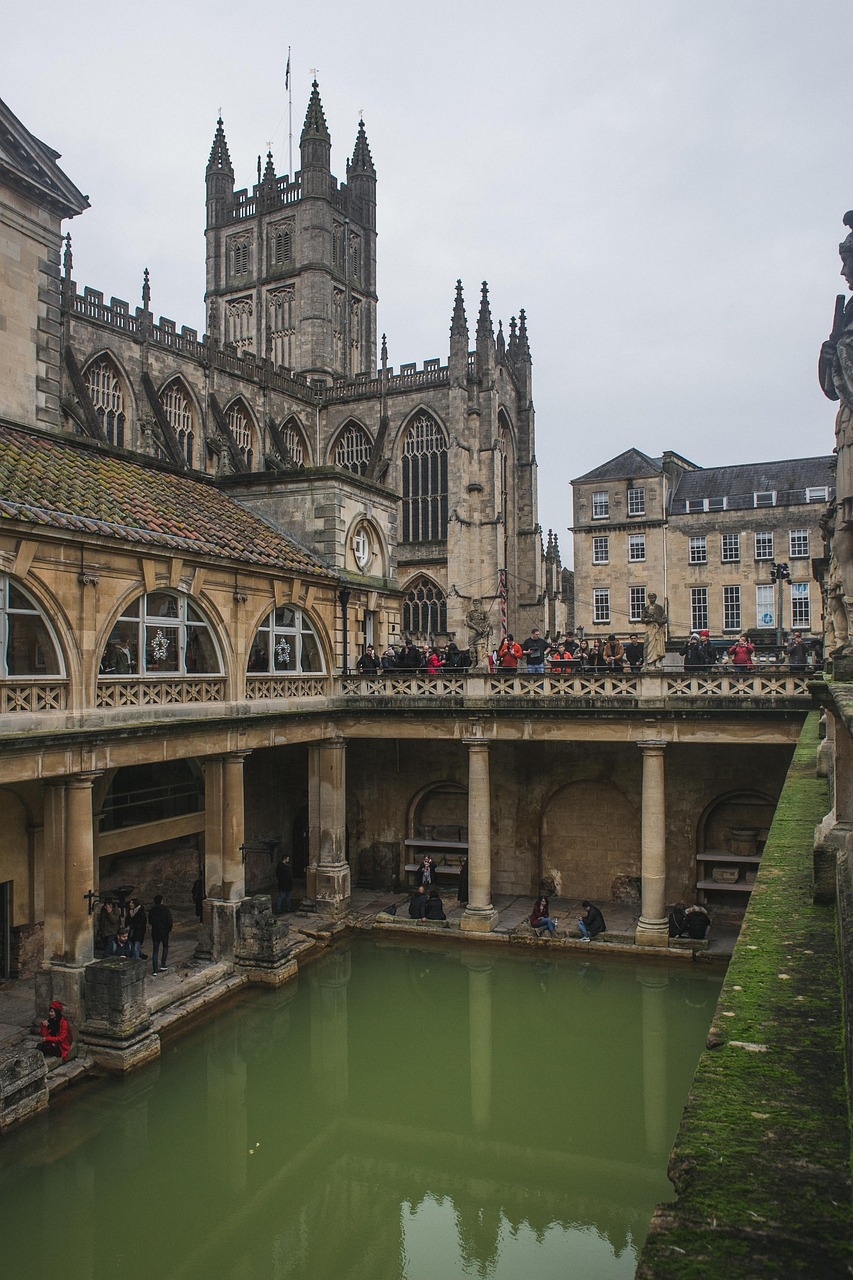
Nestled amongst rolling Somerset hills, Bath represents one of Britain’s most architecturally cohesive and historically significant cities. Founded by Romans who discovered its natural hot springs nearly 2,000 years ago, the city later flourished as Georgian high society’s playground, creating the honey-coloured stone streetscapes that earned UNESCO World Heritage status. Walking Bath’s elegant crescents and exploring its ancient baths offers an immersive journey through multiple epochs of British history.
The Roman Baths: Ancient Engineering Marvel
Bath’s founding story begins with the Romans, who established Aquae Sulis around 60 AD after discovering Britain’s only naturally occurring hot springs. The temple complex and bathing facility they constructed remained the most significant Roman religious spa in Britain, attracting visitors from across the empire seeking healing waters blessed by the goddess Sulis Minerva.
The remarkably preserved Roman Baths complex reveals sophisticated engineering that channelled 1.3 million litres of mineral-rich water daily at a constant 46°C. The Great Bath—originally covered by a barrel-vaulted roof—allowed Romans to swim surrounded by classical architecture, whilst the intricate hypocaust system heated smaller bathing rooms to varying temperatures.
Interactive displays and costumed guides bring Roman life vividly alive as you explore the temple precinct, bath chambers, and museum showcasing remarkable artefacts including curse tablets thrown into the Sacred Spring. Audio guides narrated by author Bill Bryson provide entertaining historical context suitable for all ages.
Advance booking proves essential during peak season—the baths attract over one million visitors annually. Evening visits with atmospheric lighting and fewer crowds offer magical experiences, particularly during summer when extended hours permit exploration until 10 PM.
Georgian Architecture and the Royal Crescent
Bath’s transformation into Georgian Britain’s most fashionable resort created the architectural masterpiece visible today. Master architects John Wood the Elder and Younger shaped the city between 1727 and 1781, employing classical proportions and local Bath stone to create harmonious streetscapes of unprecedented grandeur.
The Royal Crescent
This sweeping arc of 30 terraced houses represents Georgian architecture’s pinnacle. Completed in 1774, the crescent’s uniform façade conceals individually designed interiors, as wealthy residents purchased shells then customised internal layouts. Number 1 Royal Crescent operates as a museum meticulously recreating Georgian life with period furnishings, servant quarters, and authentic décor.
The expansive lawn fronting the crescent invites picnicking whilst absorbing architectural magnificence best appreciated from this vantage point. Photographers favour sunrise and sunset when golden light enhances the Bath stone’s honey tones.
The Circus
John Wood the Elder’s masterpiece predated the Royal Crescent by seventeen years. This circular arrangement of three curved segments creates an enclosed space whose diameter matches Stonehenge’s, reflecting Wood’s interest in ancient British history. Three types of columns—Doric at ground level, Ionic on the first floor, Tuscan on the second—display classical architectural orders vertically rather than the traditional horizontal arrangement.
Pulteney Bridge
Completed in 1774, this Palladian bridge spans the River Avon whilst accommodating shops on both sides—one of only four such bridges worldwide. The design echoes Florence’s Ponte Vecchio, creating a romantic setting particularly beautiful when illuminated after dark. Viewing from Parade Gardens or Grand Parade reveals the bridge’s full architectural splendour alongside the horseshoe-shaped weir below.
Bath Abbey: Medieval Masterpiece
The current abbey, completed in 1611, stands on foundations of much earlier churches dating to the 7th century. Its fan-vaulted ceiling represents some of Britain’s finest late Perpendicular Gothic architecture, whilst 52 windows—earning it the nickname “Lantern of the West”—flood the interior with light.
Jacob’s Ladder angels climbing the West Front commemorate the Bishop’s dream that inspired the abbey’s construction. Tower tours reward the 212-step climb with panoramic views across Bath’s Georgian roofscape towards surrounding countryside. The abbey hosts regular services, concerts, and recitals that showcase its magnificent organ.
The Jane Austen Connection
Bath features prominently in Jane Austen’s novels, particularly Northanger Abbey and Persuasion. The author lived in Bath from 1801 to 1806, walking streets and attending assemblies that inspired her satirical observations of Georgian social customs.
The Jane Austen Centre on Gay Street offers engaging exhibitions exploring Austen’s Bath years, Regency fashion, and the city’s influence on her writing. Costumed guides lead walking tours identifying locations mentioned in her novels, whilst the centre’s Regency Tea Room serves period-appropriate refreshments.
Annual Jane Austen Festival in September attracts enthusiasts worldwide for Regency-costumed promenades, balls, and literary discussions. Even outside festival time, spotting people in period dress isn’t uncommon—Bath embraces its Georgian heritage enthusiastically.
Thermae Bath Spa: Modern Wellness Experience
Britain’s only natural thermal spa allows visitors to bathe in the same mineral-rich waters Romans enjoyed 2,000 years ago. The contemporary glass-and-stone complex combines historic Cross Bath with modern facilities including rooftop pool offering stunning views across the abbey and surrounding architecture.
Various bathing pools maintain different temperatures, steam rooms infuse aromatherapy scents, and spa treatments incorporate thermal water’s therapeutic properties. Booking ahead secures preferred time slots, with twilight sessions particularly atmospheric as the city illuminates below.
Two-hour sessions provide ample time for relaxation without rushing. Bring swimwear, though robes and towels are provided. The Cross Bath offers a smaller, more intimate experience in an 18th-century building at lower cost than the main spa complex.
Planning Your Bath Visit
Getting There and Around
Bath lies 97 miles west of London, with direct trains reaching the city in 90 minutes. The compact city centre accommodates walking easily, though hills challenge those with mobility limitations. Open-top bus tours provide orientation whilst resting weary legs, stopping at major attractions throughout the day.
Many visitors combine Bath with nearby attractions including Stonehenge, the Cotswolds, and Bristol. Professional best UK tours often pair Bath with these destinations, creating comprehensive itineraries that showcase southern England’s diverse appeal whilst managing transport logistics and providing historical expertise.
Accommodation and Dining
Hotels range from luxury Georgian townhouses to budget chains, with B&Bs offering characterful stays in period properties. Booking several months ahead secures better rates and availability, particularly during summer and festival periods.
Sally Lunn’s Historic Eating House occupies Bath’s oldest house, serving the famous Sally Lunn bun—a large, sweet bread similar to French brioche—since 1680. The Pump Room Restaurant beside the Roman Baths offers elegant dining where Georgian society once “took the waters” whilst gossiping and socialising.
FAQ: Visiting Bath
How long should I spend in Bath?
Two full days covers major attractions comfortably, allowing time for leisurely exploration. Day trips from London prove possible but rushed, missing the city’s evening atmosphere and quieter morning charm.
Can I drink the thermal spa water?
Yes, the Pump Room serves thermal water for tasting—it’s safe though distinctly mineral-flavoured due to its 43 mineral content. Romans believed it possessed healing properties.
Is Bath suitable for families with children?
Absolutely. Children enjoy the Roman Baths with audio guides and interactive displays, whilst parks, river walks, and various museums maintain interest. Many restaurants welcome families.
What’s the best time to visit Bath?
Spring (April-May) and autumn (September-October) offer pleasant weather with fewer crowds than summer. December’s Christmas market transforms the city festively, though attracts enormous visitor numbers.
Are there good shopping opportunities?
Yes, independent boutiques line narrow lanes off main streets, whilst Milsom Street hosts upmarket retail. Antique shops, bookshops, and artisan galleries provide interesting browsing beyond chain stores.
Conclusion
Bath seamlessly weaves Roman foundations, Georgian elegance, and modern vitality into Britain’s most architecturally distinguished small city. Whether exploring ancient baths, admiring sweeping crescents, soaking in thermal waters, or following Jane Austen’s footsteps, Bath rewards visitors with beauty, history, and culture concentrated within easily walkable streets. The city’s enduring appeal lies not just in individual attractions but in the harmonious whole—a living museum where past and present coexist gracefully amongst honey-coloured stone glowing warmly in afternoon light.
